Restaurant Email Marketing: A Simple Guide That Works
Build a restaurant email list, write newsletters people open, and turn subscribers into repeat orders with this simple guide.
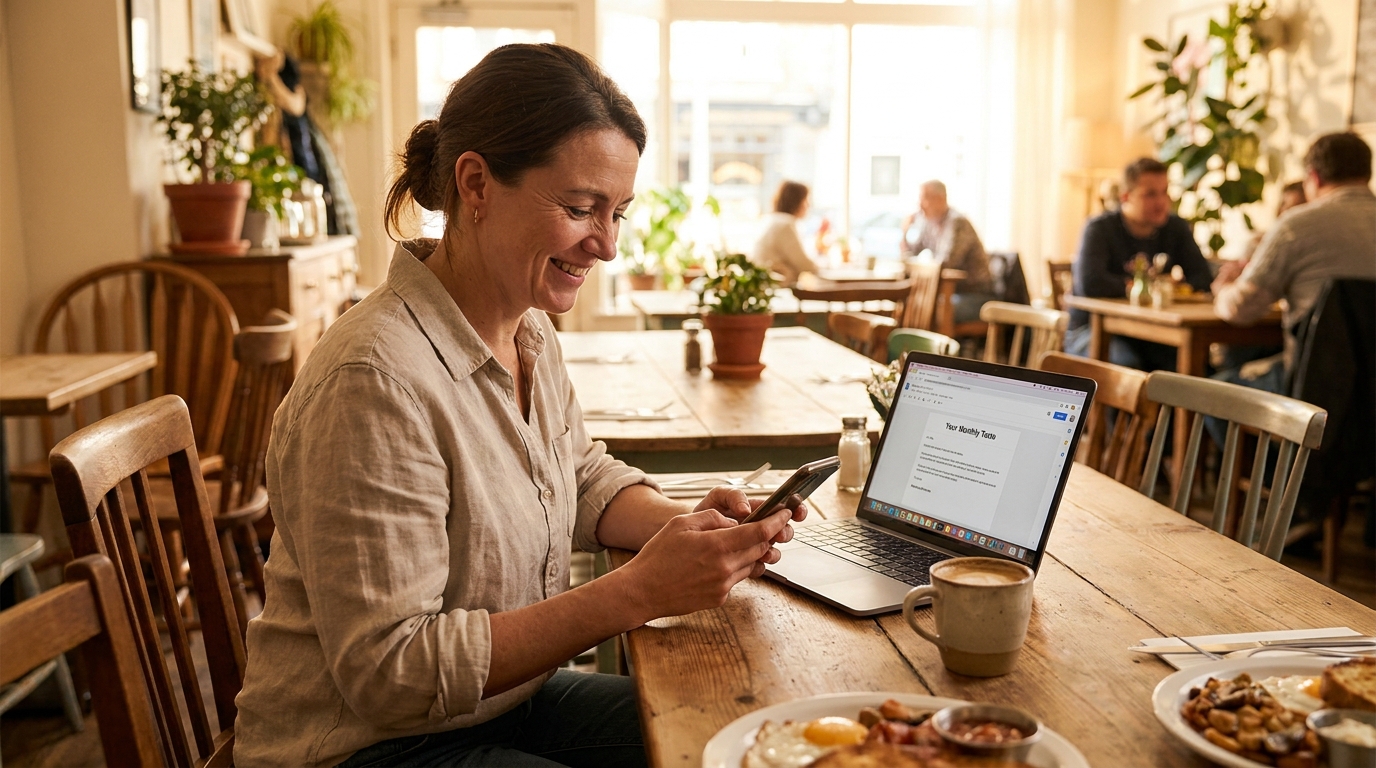
Most independent restaurants already have the hardest part of email marketing figured out. You have regulars. You have a phone full of repeat customers, a stack of receipts, and a line out the door on Friday nights.
What you do not have is a way to reach those people when the dining room is quiet on a Tuesday.
Email is still the cheapest, most reliable channel for getting a past customer to come back. It does not get throttled by an algorithm, it does not cost 25% of the ticket like a delivery app, and it lands directly in someone's pocket. A well-run list of a few hundred loyal diners can reliably fill a slow night.
This guide breaks down how restaurant email marketing actually works in 2026: how to build a list without being annoying, what to send, how often to send it, and the simple setup most owners can run in about an hour a week.
Why Email Still Beats Social for Restaurants
Social media is great for staying visible, but it is a rented audience. A single change to how Instagram ranks posts can cut your reach in half overnight, and you have no way to reach those followers directly.
Email is different in three important ways:
- You own the list. No platform can lock you out of your own customer contact list.
- Reach is predictable. A healthy restaurant list usually sees 30% to 45% open rates. Compare that to organic social reach, which often sits below 10%.
- The intent is higher. Someone who gave you their email already chose to hear from you. That is a warmer audience than a random like or follow.
For a restaurant, email is not about blasting coupons. It is about staying top of mind so that when someone asks "where should we eat tonight?", your name comes up first.
Step 1: Build a List Without Being Pushy
You cannot email people who never gave you permission, and you should not buy a list. Purchased lists are full of strangers, get flagged as spam, and can get your sender reputation destroyed. Build your list the honest way.
Collect emails at the point of sale
Your POS or online ordering system is the best list-building tool you already own. If people order online, you can ask for an email on the checkout screen. Offer something concrete in exchange, like a free side on their next order or early access to a seasonal menu.
Use a simple QR code on the table and receipt
A small table card that says "Get $5 off your next visit, scan here" converts far better than a generic "join our newsletter" sign. Put the same QR code on every receipt and on the bag for takeout orders.
Add a signup form to your website
If someone is already on your site looking at your menu, they are interested. A single email field near the top of the page, or a footer form, captures people who are not ready to order right now but want to remember you.
Run a giveaway that fits your restaurant
Free appetizers, a gift card, or a "first to know about our specials" list all work. The prize should match your brand. A taco shop giving away a free drink is more believable than a fine-dining spot running a discount, which can cheapen the experience.
The goal is not to collect thousands of emails. A tight list of 300 local diners who genuinely like your food is worth more than 5,000 cold contacts who will never open a message.
Step 2: Choose the Right Email Tool
You do not need enterprise software. Most restaurant email needs can be handled by an affordable platform, and many integrate directly with your online ordering system.
| Tool | Free Tier | Best For | Starting Paid Price |
|---|---|---|---|
| Mailchimp | Up to 500 contacts | Beginners who want templates and automation | Free, then ~$13/mo |
| MailerLite | Up to 1,000 contacts | Restaurants wanting low-cost automation | Free, then ~$10/mo |
| Constant Contact | 60-day trial | Owners who want phone support | ~$12/mo |
| Your ordering platform | Varies | Sending promos to past orderers automatically | Often included |
If your online ordering system or website already includes an email feature, start there. The fewer logins and the less monthly overhead, the more likely you are to actually send something.
Whatever you pick, make sure it supports a proper unsubscribe link and does not put your emails in the promotions tab. That is basic deliverability, not a nice-to-have.
Step 3: Send Emails People Actually Open
A restaurant email should be short, visual, and specific. The subject line decides whether it gets opened, and the first line decides whether anyone reads further.
Write subject lines that create a small, real reason to look
- "New fall menu drops Thursday"
- "We saved you a seat for Taco Tuesday"
- "Your $5 credit expires Friday"
- "The dish our regulars keep asking for is back"
Avoid fake urgency and all-caps shouting. Restaurants live on trust, and email is no different.
Keep the body to one job
Each email should do one thing: drive a reservation, an order, a visit, or a click. If you want people to try a new dish, put a big photo of it near the top and a single button below. Do not stack five different calls to action in one message.
Use your own food photos
Stock photos are obvious and forgettable. A slightly imperfect phone photo of the actual dish, shot in natural light, will outperform a polished generic image every time. Check out our guide on restaurant food photography tips for simple ways to make your own photos look good.
Make the mobile experience the priority
More than half of your subscribers will open the email on a phone. Test every send on your own phone before you hit go. If the button is hard to tap or the text is tiny, fix it.
Step 4: The Email Campaigns Every Restaurant Should Run
You do not have to invent a new email every week. A small set of repeatable campaigns covers almost everything a restaurant needs.
| Campaign | When to Send | What It Does |
|---|---|---|
| Welcome email | Immediately after signup | Thanks them, sets expectations for how often you email, delivers the promised offer |
| Weekly or biweekly special | On a slow day you want to fill | Promotes a specific dish, event, or deal with one clear call to action |
| Win-back email | 60 to 90 days since last visit | Reminds lapsed customers you exist, often with a small incentive |
| Birthday email | During their birthday month | A free dessert or drink turns a personal moment into a visit |
| New menu or seasonal launch | When the menu changes | Gives regulars a reason to come back and try something new |
| Event and holiday promo | Before big dining dates | Fills seats for Valentine's, Mother's Day, game days, and local happenings |
The welcome email is the most important one
It is the first message a new subscriber sees, so it sets the tone. Send it right away, keep it warm, and deliver exactly what you promised. If you offered a free appetizer for signing up, that email should contain the code or the instructions.
The win-back email quietly pays for itself
Most restaurants never contact a customer again after one visit. A simple message to people who have not ordered in a couple of months, with a genuine "we miss you" tone and a small offer, is one of the highest-return sends you can run.
Step 5: Automate the Boring Parts
Automation means the email sends itself based on a trigger, not a calendar reminder on your phone. Start with these three, in order:
1. Welcome automation. Triggers the moment someone joins your list.
2. Birthday automation. Triggers once a year based on the birthday you collected.
3. Win-back automation. Triggers when a customer has not ordered in 60 to 90 days.
Together these three run in the background and do more for repeat business than most one-off blasts.
How Often Should You Email?
Quality beats frequency. Most independent restaurants do well with one email every one to two weeks, plus the automated welcome, birthday, and win-back messages.
If you have nothing worth saying, do not send. A list that receives only relevant, useful emails stays engaged. A list that gets three promotions a week goes stale and starts ignoring you.
A practical rhythm for a busy owner:
- Weekly: one featured special or event
- Monthly: one menu update, story, or behind-the-scenes note
- Always running: welcome, birthday, and win-back automations
That is roughly 30 minutes of writing and 15 minutes of setup per send once your templates are built.
Common Mistakes That Kill Restaurant Email Lists
- Sending too often. More than one promotion a week trains people to ignore you.
- Never sending at all. A list that sits untouched for months goes cold and unsubscribes in droves once you finally send.
- Using only discounts. Constant coupons cheapen your food. Mix in new dishes, events, and stories.
- Ignoring mobile. A beautiful desktop email that breaks on a phone does nothing.
- Forgetting the unsubscribe link. It is legally required and it keeps your sender reputation clean.
- Buying a list. Never worth it. It burns your domain and annoys strangers.
Measuring What Works
You do not need a data dashboard. Track four numbers per send, and you will know within a month what your audience responds to:
- Open rate: how many people saw your subject line and cared enough to click.
- Click rate: how many took the action you asked for.
- Unsubscribe rate: a sudden spike means you are sending too much or the wrong thing.
- Orders or reservations attributed: the only number that matters at the end of the day.
If one email drives a full night of reservations, copy the format and repeat it.
Where Email Fits With Your Website
Email works best when it has somewhere to send people. Every email should link back to a page where the diner can see your menu, get directions, or place an order in two taps. If your website is slow, outdated, or missing an easy ordering path, your email list will underperform no matter how good the copy is.
That is one reason we build websites for independent restaurants at no cost. A fast, mobile-first site with a clear menu and one-tap ordering makes every email, text, and social post more effective. You can see how the model works in our breakdown of how much a restaurant website really costs and why we give ours away for free.
If your current site is a PDF menu or a neglected Facebook page, start there. Email cannot fix a broken landing page.
Start Small, Then Build the Habit
You do not need a big campaign to get started. This week, do three things:
1. Put a QR code signup on every table and receipt.
2. Load your existing customer emails into a basic email tool.
3. Write one welcome email that delivers a small thank-you offer.
That is a functioning restaurant email program. Add a weekly special when you are ready, then layer in the birthday and win-back automations.
Restaurants thrive on regulars, and email is the simplest way to turn a first visit into a habit. Keep the messages honest, keep them useful, and keep them coming, and your list will quietly become one of the most valuable assets your restaurant owns.
Ready to make sure every email has a fast, modern place to land? Get your free restaurant website today.
Free Website Offer
Get a modern website for your restaurant with zero cost and no monthly fees
We design and host your menu, hours, and photos on a custom domain. Keep 100% of your food sales, with optional online ordering when you are ready.