Why Restaurants Fail: 10 Reasons and How to Avoid Them
About 17% of restaurants close in year one. See the 10 most common reasons restaurants fail and practical fixes for each.
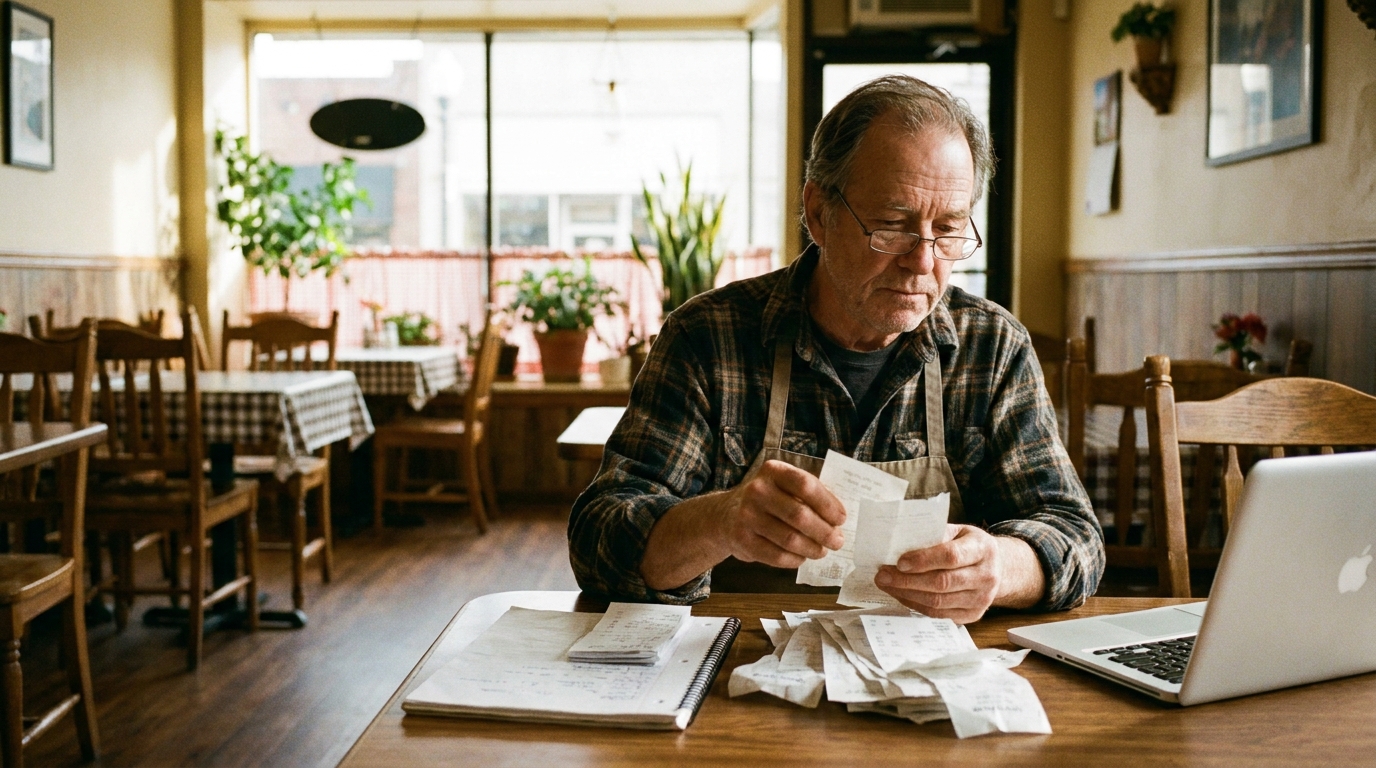
Most restaurants do not fail in a single, dramatic week. They fail slowly, over months, through a hundred small leaks that never get plugged until the money runs out. By the time an owner sees the problem clearly, the options have narrowed to raising prices, cutting hours, or closing the doors.
That is the uncomfortable part of why restaurants fail: the warning signs are almost always there long before the final month. The food is still good. The regulars still show up. But somewhere between the dining room and the bank account, the math stopped working.
This guide walks through the 10 most common reasons restaurants fail, why each one matters, and the practical fix for each. It is written for independent operators who do not have a corporate team to catch mistakes, which means the fixes need to be simple and realistic, not theoretical.
---
Quick Summary: The 10 Reasons Restaurants Fail
| # | Reason | The Fix |
|---|---|---|
| 1 | Running out of cash | Budget 6 to 12 months of runway before opening |
| 2 | Weak location and visibility | Fix signage, directions, and how findable you are |
| 3 | No real online presence | Own a fast website and a complete Google profile |
| 4 | Bloated, unfocused menu | Cut the menu to what you execute best |
| 5 | No food cost discipline | Track cost per plate and control portions |
| 6 | Pricing that ignores reality | Price against full cost, not gut feel |
| 7 | Leaning on third-party delivery | Build direct ordering you control |
| 8 | Inconsistent food and service | Standardize recipes, tickets, and training |
| 9 | Inexperienced or checked-out management | Learn the numbers or hire someone who does |
| 10 | Ignoring feedback and data | Review reviews, sales, and waste every week |
None of these are mysterious. They are habits and systems, and every one of them can be fixed by a motivated operator. Let us go through them one at a time.
---
1. Running Out of Cash Before the Business Matures
The single most common reason restaurants fail is simple: they run out of money. Not because the concept was bad, but because the owner underestimated how long it takes to become profitable and how much cash that takes.
New restaurants rarely break even in month two. Most need six to twelve months of steady build to reach a stable customer base, and every one of those months requires rent, payroll, utilities, insurance, and food, whether the dining room is full or not.
The Fix
- Build a cash cushion of at least six months of fixed expenses before you open, and twelve if you can.
- Track your weekly cash position, not just your monthly profit and loss statement. Cash is what pays the bills, and it moves faster than profit.
- Know your break-even number by heart: how many covers or tickets per day you need just to cover fixed costs.
- When sales dip, cut discretionary spending early instead of waiting for a recovery that may not come.
Running out of cash is usually a symptom of the other nine reasons below, but it is also its own discipline. Owners who watch cash weekly catch problems while they are still small.
---
2. Poor Location and Low Visibility
A restaurant can have world-class food and still fail because nobody knows it exists. Location is not only about foot traffic. It is about whether a hungry person who was not already looking for you can find you, notice you, and decide to walk in.
Signage that is too small, an entrance tucked behind a parking structure, a building with no street presence, or a stretch of road that people only pass after dark will all quietly drain your potential customer count.
The Fix
- Walk your block like a customer, from the street, at lunch and at dinner. Is your sign readable at driving speed?
- Make sure your address is accurate and findable in mapping apps, with an entrance pin, not a rooftop pin.
- Invest in exterior lighting so you look open and inviting after sunset.
- If your space is genuinely hidden, lean harder on the channels you control: search, reviews, and a website that tells people exactly how to find you.
---
3. No Real Online Presence
This is where independent restaurants lose to chains without ever realizing it. A huge share of first-time diners find a restaurant online before they ever see the building. They search "tacos near me," scan a map, tap a few results, and decide in under a minute.
Restaurants fail at this stage because they have no website, a website that will not load on a phone, or nothing more than a Facebook page. If a customer searches for your cuisine and your neighborhood and cannot find you in those first few results, they eat somewhere else.
The Fix
- Get a fast, mobile-friendly website that loads your menu as real text, not a PDF. Google cannot read a PDF menu the way it reads a web page.
- Claim and fully complete your Google Business Profile: categories, hours, photos, menu, and attributes.
- Keep your name, address, and phone number identical everywhere they appear online.
- Build a steady flow of recent reviews, because Google and customers both use them as a trust signal.
A restaurant that shows up first when someone nearby searches for its food starts every day with a line of customers it did not have to pay for. That is why fixing your online presence is one of the highest-return moves available to an independent operator.
---
4. A Menu That Tries to Do Too Much
The thicker the menu, the more things can go wrong. Large menus increase food waste, slow down the kitchen, complicate training, and scatter your inventory across dozens of ingredients that each sit and expire.
When a restaurant fails, you can often trace part of it back to a menu with 80 items, where none are truly dialed in and half are not selling.
The Fix
- Cut anything that does not sell well or that slows the kitchen during peak hours.
- Build the menu around a focused core of dishes you can execute consistently and fast.
- Use menu engineering to place your high-margin, high-appeal items where customers actually look.
- Treat every item as an ingredient commitment. If it does not earn its place, it costs you money.
A tighter menu lowers food cost, speeds up service, and makes your food better, all at the same time.
---
5. No Food Cost or Portion Control Discipline
Two restaurants can serve the same dish and one makes money while the other does not, and the difference is what happens between the invoice and the plate. Over-portioning, kitchen waste, spoilage, and untracked theft all eat margin silently.
Food cost that drifts from 30% to 38% can wipe out an entire profit in a low-margin business, and most owners never notice until the quarterly numbers arrive.
The Fix
- Calculate the cost per plate for your top dishes, including every ingredient, and review it as prices change.
- Standardize portions with scales, scoops, and printed specs, then train staff on them.
- Run weekly inventory on your highest-cost items, especially proteins and alcohol.
- Watch your actual food cost percentage monthly and investigate any jump instead of accepting it.
You do not need to change your prices or your menu to improve profit here. You need to control what leaves the kitchen.
---
6. Pricing That Ignores the Real Numbers
Many restaurants fail because they priced their menu on gut feel, competitors' prices, or what "feels fair," without accounting for the full cost of doing business. Rent, insurance, credit card fees, delivery commissions, labor, and utilities all have to come out of that price.
Pricing a burger at what the shop down the street charges, when your rent is three times theirs, is a slow-motion path to failure.
The Fix
- Price against your true cost per plate, plus your overhead allocation and target margin.
- Review prices at least twice a year, because your suppliers do not wait to raise theirs.
- Use small, well-communicated adjustments instead of a large, panicked jump later.
- Separate your reasoning from your ego. A price is a number that has to cover real costs, not a statement about your food.
---
7. Relying on Third-Party Delivery as Your Marketing
Delivery apps feel like free reach when you sign up. They are not. Commissions typically run 15% to 30% per order, and when a restaurant leans on them as its main source of orders, it hands away a huge slice of its margin while the platform owns the customer relationship and the data.
When the commission eats the profit, and the restaurant never built its own ordering channel, the whole model starts to fail.
The Fix
- Treat third-party apps as a supplemental channel, not your lifeline.
- Build direct ordering through your own website so regulars can order without a middleman taking a cut.
- Put a small insert or a link on every bag and receipt pointing repeat customers to your direct ordering page.
- Compare your commission cost against a flat-fee direct ordering setup, and run the math honestly.
Restaurants that own their ordering channel keep far more of every dollar and, just as importantly, keep the customer data that lets them bring people back.
---
8. Inconsistent Food and Service
A restaurant's reputation is built on repeat visits, and repeat visits depend on consistency. One great meal brings someone back. One bad meal on a busy Friday can end that relationship for good, and they will tell their friends.
Inconsistency usually comes from a lack of standards: no written recipes, no ticket times to hit, no training checklist, and no one checking the plate before it leaves the pass.
The Fix
- Write down your recipes and your standards, then train to them, not from memory.
- Track ticket times and fix the bottlenecks that cause slow or rushed service.
- Do a quick plate check and a temperature check during service, every service.
- Hold people to the standard consistently, including yourself on the days you want to cut corners.
---
9. Inexperienced or Checked-Out Management
Passion for cooking is not the same as skill at running a business, and that gap sinks a lot of restaurants. Owners who love the food but avoid the spreadsheets, the scheduling, and the hard staff conversations tend to discover problems late.
The opposite failure is just as common: an owner who is burned out and quietly checked out, present in body but not in attention.
The Fix
- Learn the few numbers that matter: food cost, labor cost, prime cost, and break-even.
- Block time each week for the business side, not just the kitchen side.
- Hire or delegate the parts you are weakest at, whether that is bookkeeping, marketing, or scheduling.
- Protect your own energy, because a restaurant reflects the attention of the person running it.
---
10. Ignoring Feedback and Data
Restaurants fail quietly when owners stop listening. Negative reviews pile up unread. Sales trends go unreviewed. Waste gets tossed without a second thought. Every one of these is a signal, and signals ignored become emergencies.
The Fix
- Read every review, and respond to the negative ones with something useful, not defensive.
- Look at your sales by item, by day, and by hour, and act on what the data shows.
- Track waste and comps, which are often the fastest place to find lost profit.
- Ask regulars directly what they would change. They usually already know.
---
The Common Thread: The Problem Is Almost Always the System
Look back at the list and you will see a pattern. Restaurants rarely fail because of one unlucky event. They fail because a handful of systems, cash, cost, consistency, visibility, and feedback, were never put in place, and the leaks compounded until the business could not absorb them anymore.
The encouraging side of that pattern is this: systems can be installed. A focused menu, controlled food cost, a real online presence, and a habit of watching the numbers turn a fragile restaurant into a durable one. None of it requires a big budget. It requires attention.
---
Your Website Is Part of the Foundation
Two of the reasons above, visibility and demand you control, come down to having a real home online. A fast, mobile-friendly website with your menu in real text and a complete Google Business Profile is how a nearby customer finds you, trusts you, and orders directly instead of through an app that skims your margin.
Free Restaurant Website builds independent restaurants a custom, modern, fast website at no cost: no monthly fees, no ads, no contracts, and no fine print. Your menu becomes readable HTML that Google can index, your hours and location are structured the way search engines expect, and direct online ordering through SendFoodOrder is there whenever you want it.
Claim your free restaurant website and check off the foundation, so you can put your energy into the food, the people, and the numbers that keep the doors open.
Free Website Offer
Get a modern website for your restaurant with zero cost and no monthly fees
We design and host your menu, hours, and photos on a custom domain. Keep 100% of your food sales, with optional online ordering when you are ready.