Restaurant Loyalty Rewards Programs: A Practical Guide
A restaurant loyalty rewards program turns first-time diners into regulars. Here is how to design one that fits your budget and truly drives repeat visits.
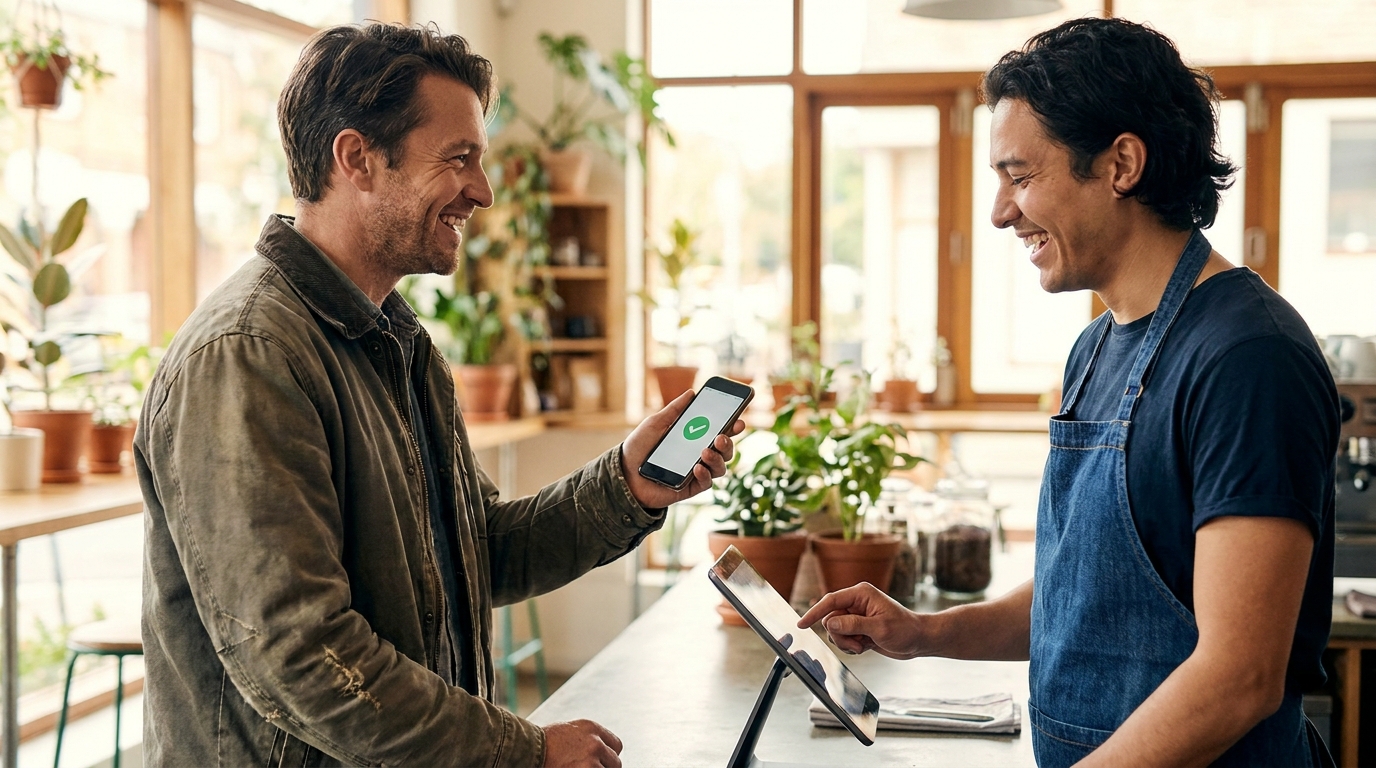
Most independent restaurants already have a loyalty program. It just lives in the owner's head.
You know the regular who comes in every Tuesday for the same bowl. You know the family that orders two large pizzas every other Friday. You might even comp them a dessert now and then. It feels generous, and it is, but it is also invisible, inconsistent, and impossible to measure.
A restaurant loyalty rewards program turns those informal habits into a system. It gives guests a reason to choose you over the place down the street, and it gives you data on who is actually coming back. Done well, it is one of the cheapest ways to grow revenue you already earned.
Done poorly, it becomes a discount machine that trains people to wait for a deal. This guide covers the difference, what the options cost, and how to launch a program without adding a second job to your week.
---
Do You Actually Need a Loyalty Program?
Not every restaurant does. A destination spot with a months-long waitlist can probably skip it. A restaurant with a steady flow of tourists and one-time visitors will get less from it too.
A loyalty program pays off when:
- You have a meaningful share of repeat customers, especially for takeout, coffee, lunch, or delivery.
- Your average ticket is high enough that a small reward does not wipe out the margin.
- You can capture contact information at the counter, online, or through a receipt.
- You have the staff and systems to honor rewards consistently.
If any of those are missing, fix the basics first. A loyalty program cannot rescue a restaurant with inconsistent food, slow service, or a website that does not load on a phone.
The real question is not "should we have a program?" It is "what behavior do we want to reward, and what can we afford to give away?"
---
The Five Main Types of Restaurant Loyalty Rewards Programs
Most programs fall into one of five buckets. Each has a different cost, complexity level, and effect on guest behavior.
| Program Type | How It Works | Best For | Main Risk |
|---|---|---|---|
| Punch card / visit-based | Buy 9, get the 10th free | Coffee shops, quick serve, high-frequency spots | Easy to game; no guest data |
| Points-based | Earn points per dollar, redeem for menu items | Full service, delivery, mixed menus | Points liability adds up |
| Tiered | Spend more, unlock better perks | Higher-ticket restaurants and bars | Confusing for casual guests |
| Surprise and delight | Random free item or upgrade | Building goodwill with regulars | Hard to measure; inconsistent |
| Paid membership | Guest pays upfront for ongoing perks | Strong local brands with loyal followings | Requires real perceived value |
Punch cards and digital stamp cards
The classic paper punch card still works, especially in coffee shops and casual counters. The digital version lives in Apple Wallet, Google Wallet, or a loyalty app, so guests cannot lose it and you can send a reminder when they are one stamp away.
The strength is simplicity. The weakness is that you learn almost nothing about the guest. You know they visited, but not what they ordered, how much they spent, or how to reach them.
Points-based programs
Guests earn points for every dollar spent and redeem them for food, drinks, or merchandise. This is the model most national chains use because it scales and captures transaction data.
The important detail is the redemption rate. If guests earn one point per dollar and 100 points equals a $10 reward, you are giving back roughly 10% of revenue. That may be fine for a high-margin item, but it is too generous if it applies across a low-margin menu.
Tiered programs
Tiered programs reward your best guests with better perks as they spend more. A restaurant might have three levels: a welcome tier, a regular tier, and a VIP tier with priority reservations, free delivery, or a birthday tasting.
Tiers work best when the benefits are experiential rather than purely financial. Early access to a seasonal menu or a reserved table on a busy night costs you less than a flat 15% discount and feels more valuable.
Surprise and delight
Not every program needs a formal structure. A free appetizer for a table that ordered a bottle of wine, or a cookie tucked into a regular's takeout bag, can build more loyalty than a points balance.
The catch is that it is hard to systematize and harder to measure. Use it as a layer on top of a program, not as the program itself.
Paid memberships
A paid membership, such as $49 a year for a free birthday entree and 10% off every visit, creates upfront cash and a committed customer. It also raises expectations. If the perks are weak or the redemption process is clunky, members will resent the fee.
Only launch a paid membership if you already have a loyal base and can deliver obvious value every month.
---
What a Restaurant Loyalty Rewards Program Actually Costs
Costs vary widely depending on whether you use paper, your POS, or a dedicated platform.
| Option | Typical Cost | What You Get | Watch Out For |
|---|---|---|---|
| Paper punch cards | $50 - $150 for printing | Simple visit tracking | No data, easy to lose, staff must remember |
| POS loyalty add-on | $0 - $75 / month | Integrated points, receipts, basic reporting | Limited marketing tools; tied to your POS |
| Dedicated loyalty platform | $50 - $300 / month | Apps, automation, segmentation, analytics | Setup time and annual contracts |
| Enterprise loyalty software | $300 - $1,000+ / month | Advanced CRM, personalization, multi-location | Overkill for a single independent |
| In-house website + email tool | $0 - $30 / month | Signup forms, email/SMS campaigns, manual rewards | Requires some manual administration |
For a single independent restaurant, the sweet spot is usually a POS add-on or a lightweight platform in the $0 to $100 per month range. If a vendor quotes you several hundred dollars a month plus a setup fee, ask what specifically you get that a simpler tool cannot do.
The hidden cost: redemptions
Software is only part of the expense. The bigger number is the value of what you give away.
Here is a simple way to model it:
1. Estimate monthly revenue from loyalty members.
2. Multiply by your expected redemption rate, typically 2% to 8% of member revenue.
3. Add the software fee.
4. Compare that total to the incremental visits you expect.
Example: 400 members spend $30 each per month, for $12,000 in member revenue. At a 5% redemption rate, you give back $600 in food and drinks. Add $60 for software, and the program costs about $660 per month. If the program generates even 25 extra visits at a $30 ticket, that is $750 in new revenue, plus the margin on everything else members buy.
The math only works if the program changes behavior. Rewarding people who would have come anyway is a cost, not a growth strategy.
---
How to Design a Program That Changes Behavior
The best programs are built around a specific action you want more of. "Be loyal" is not an action. "Order directly instead of through DoorDash" is.
1. Pick one primary goal
Choose a single measurable outcome for the first six months. Examples:
- Increase repeat visits from once a month to twice a month.
- Shift delivery orders from third-party apps to your own website.
- Grow email and SMS list to 1,000 local guests.
- Increase average ticket by $4 through bundle rewards.
If you try to do all four at once, you will build a complicated program that nobody understands.
2. Reward the behavior, not just the spend
A points program that only rewards dollars spent will not fix a channel problem. If you want direct orders, give bonus points for ordering on your website. If you want weekday traffic, double points on Tuesday and Wednesday.
This is where most independent programs leave money on the table. The reward structure is the strategy.
3. Keep the first reward close
A guest should be able to earn something within two or three visits. If the first meaningful reward requires $300 in spending, most people will forget the program exists before they get there.
A common structure is a welcome reward, a small reward at the first repeat visit, and a larger reward after five visits. Each step should feel achievable.
4. Make redemption effortless
The fastest way to kill a loyalty program is to make guests ask a manager, dig through an email, or explain the rules to a new server. Redemption should happen at the register or in the ordering flow with one tap or one scan.
Train every shift on the program. Put a one-page cheat sheet by the POS. If staff cannot explain it in ten seconds, simplify it.
5. Capture contact information from day one
Points are useful. Contactable guests are more useful. Ask for an email or phone number at signup and give a clear reason: birthday rewards, early access to specials, or a welcome offer.
Keep the signup short. Every additional field reduces completion. Name, phone or email, and a birthday month are usually enough.
6. Set a redemption cap and expiration
Points liability can creep up quietly. Set a maximum redemption per visit, and expire points after a reasonable window, such as 12 months of inactivity. State this clearly in the terms.
This is not about being stingy. It is about keeping the program financially predictable.
7. Measure the right numbers
Track four metrics monthly:
- Enrollment rate: what share of guests join
- Active member rate: what share of members visited in the last 30 days
- Repeat visit frequency: visits per member per month
- Redemption rate: rewards redeemed as a share of member revenue
If enrollment is high but active rate is low, the rewards are not compelling. If redemption is very high and visits are flat, you are discounting your existing customers.
---
Common Mistakes That Sink Loyalty Programs
Discounting the whole menu. A blanket 10% off every order trains guests to wait for the discount and erodes margin. Reward specific items or behaviors instead.
Making it too complicated. If a guest needs an app, a QR code, a password, and a manager's approval, most will give up. Every step you add loses people.
Ignoring your best customers. New-guest offers are important, but your regulars should not watch first-timers get better deals. Give existing members a reason to stay.
Launching without staff buy-in. The program lives at the counter. If servers and cashiers are not trained and incentivized to mention it, enrollment will stall.
Treating it as a software purchase. The tool is maybe 20% of the work. The offer, the messaging, and the follow-through are what make it perform.
No follow-up communication. A loyalty list that never receives an email or text is just a database. Plan a monthly message with a clear reason to come back.
---
Where Your Website Fits In
Your website is the best place to run a loyalty program for one simple reason: you own the audience.
Third-party delivery apps keep the customer relationship. A guest who orders through DoorDash belongs to DoorDash. A guest who joins your loyalty list through your own site belongs to you.
A practical setup looks like this:
- A clear "Join our rewards program" button in the header and on the menu page.
- A short signup form that adds guests to your email or SMS list.
- A welcome message with the first reward and a link to order directly.
- A monthly email featuring a member-only item or a bonus-point day.
- A simple way to redeem at the counter or in your online ordering flow.
You do not need a custom app to start. A website, a signup form, and a consistent monthly email can carry a program for a long time.
If you want to shift orders away from third-party marketplaces, tie bonus rewards to direct ordering. "Earn double points when you order on our site" is a concrete reason to change behavior, and it costs you less than a 25% delivery commission.
---
A 30-Day Launch Plan
Week 1: Define the offer
- Choose one goal and one primary reward.
- Set the earn rate, redemption value, and expiration policy.
- Write the rules in plain language.
Week 2: Set up the tools
- Configure the loyalty feature in your POS or choose a lightweight platform.
- Build the signup form on your website.
- Connect the signup to your email or SMS tool.
Week 3: Train the team
- Walk every shift through enrollment and redemption.
- Put a one-page cheat sheet by the register.
- Set a simple staff goal for the first month, such as signups per shift.
Week 4: Launch and promote
- Announce the program by email and social media.
- Add a table tent, receipt message, and website banner.
- Offer a launch incentive for the first 100 members.
After 30 days, review enrollment, active members, and redemption rate. Adjust the reward, not the entire program. Small changes to the earn rate or the first reward usually matter more than switching software.
---
Frequently Asked Questions
How much should a restaurant spend on a loyalty program?
For a single independent restaurant, $0 to $100 per month in software is usually enough. Budget another 2% to 8% of member revenue for rewards, and keep the total below the margin you gain from incremental visits.
What is the best loyalty program for a small restaurant?
A simple points or digital stamp program tied to your POS is usually the best starting point. It is easy to explain, easy to redeem, and gives you basic data without a long setup.
Do loyalty programs actually increase sales?
They can, but only when they reward a behavior that would not have happened otherwise. Programs that simply discount existing regulars tend to add cost without adding visits.
Should I use an app or a website?
Start with your website and a lightweight tool. A custom app is expensive to build and harder to get guests to download. Add an app only after you have a large, active member base.
How do I stop people from gaming the program?
Use one account per phone number or email, set a redemption cap per visit, expire inactive points, and require the reward to be redeemed in person or through your ordering system.
---
The Bottom Line
A restaurant loyalty rewards program is not a magic growth lever. It is a structured way to say thank you, learn who your regulars are, and give people a reason to come back sooner.
Start small. Pick one behavior, make the first reward easy to earn, capture contact information, and measure whether visits actually change. If the numbers move, invest more. If they do not, change the offer before you change the software.
And if your current website is not set up to capture signups or take direct orders, fix that first. A loyalty program needs a home base. Get a free, custom restaurant website and give your regulars a place to join, order, and come back to.
Free Website Offer
Get a modern website for your restaurant with zero cost and no monthly fees
We design and host your menu, hours, and photos on a custom domain. Keep 100% of your food sales, with optional online ordering when you are ready.