Online Ordering for Restaurants: Direct vs Third-Party Delivery Apps
Why restaurant owners lose 20% to 30% per ticket on DoorDash and UberEats, and how direct ordering protects your margins.
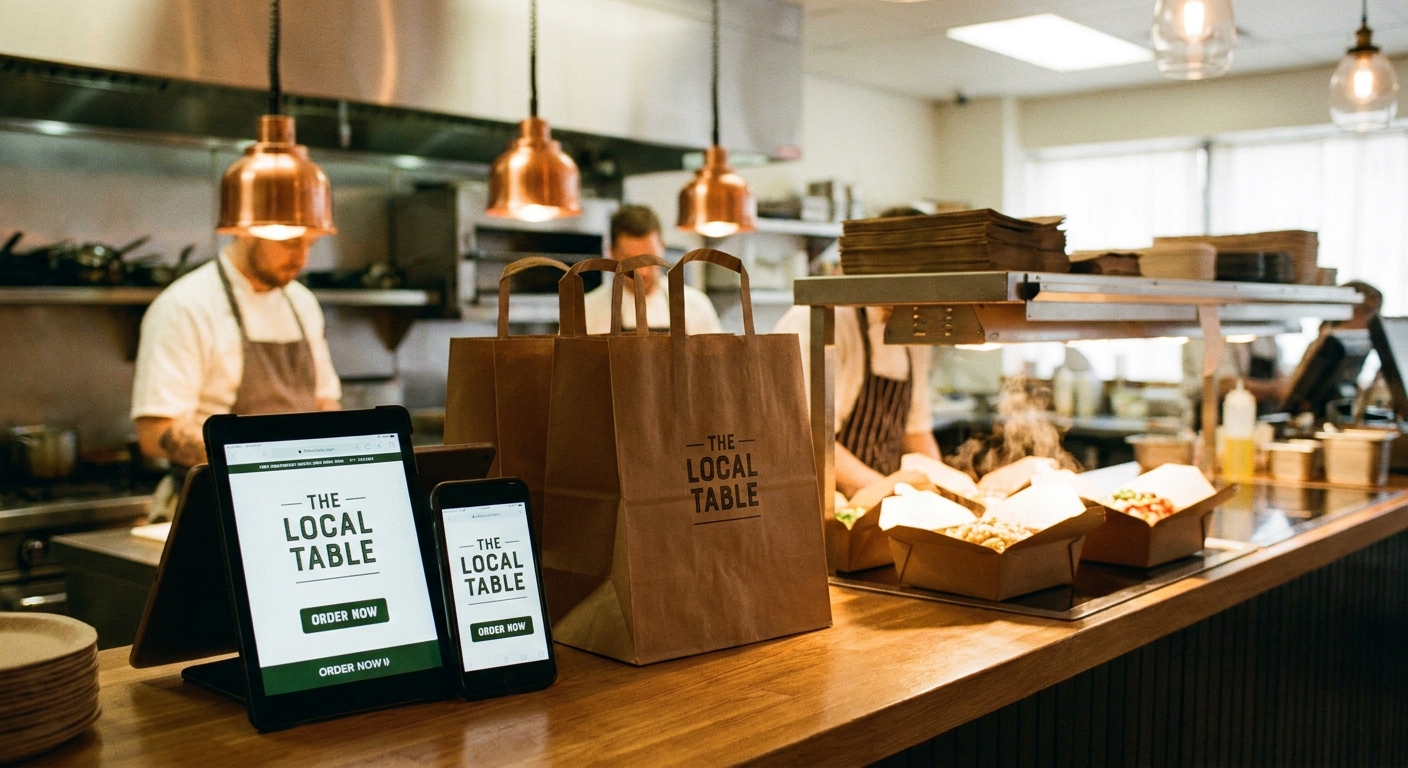
Search for online ordering for restaurants and you will be met with two very different paths.
On one side stand third-party delivery marketplaces like DoorDash, Uber Eats, and Grubhub. They promise instant discovery, an army of couriers, and turnkey order handling. On the other side sits direct online ordering, where customers order through your own website, and you keep your customer relationships, your guest data, and your bottom line.
For years, aggregators pitched delivery as pure upside: incremental volume that would not cannibalize your dine-in crowd. In reality, delivery apps often extract between 20% and 30% of every ticket, leaving independent operators doing more kitchen volume while watching net margins shrink.
If your restaurant is weighing whether to stay all-in on aggregator apps or invest in direct online ordering, here is an honest look at the real economics, the operational trade-offs, and how independent restaurants build a profitable ordering channel without bleeding commission fees.
---
The True Cost of Third-Party Delivery Apps
Third-party apps are phenomenal discovery engines, but they are expensive payment processors. When a customer orders a $50 dinner through DoorDash or Uber Eats, here is how the revenue typically breaks down:
| Line Item | 3rd-Party Delivery App (25% Comm.) | Direct Online Ordering ($30/mo flat) |
|---|---|---|
| Order Total | $50.00 | $50.00 |
| Marketplace Commission | -$12.50 | $0.00 |
| Credit Card Processing (~2.9% + $0.30) | Included | -$1.75 |
| Net Payout to Restaurant | $37.50 | $48.25 |
| Your Gross Margin Retention | 75% | 96.5% |
Over the course of a year, that spread is enormous. A restaurant doing just 30 takeout or delivery orders a day with an average ticket of $40 will process $438,000 in annual ordering volume.
- On a third-party app charging 25%: The restaurant surrenders $109,500 in commissions.
- On a direct ordering platform with flat software pricing: The restaurant pays around $13,000 in standard merchant processing fees plus a modest software subscription.
That difference of over $90,000 is often the entire net profit margin for an independent restaurant.
---
Direct vs. Third-Party: Key Differences
To understand why independent operators are moving toward direct ordering, consider how each channel impacts four critical areas of your business:
1. Customer Ownership and Guest Data
When someone orders through a delivery marketplace, they are not your customer. They belong to DoorDash or Uber Eats. The aggregator controls their contact info, their email address, and their order history.
More concerning, delivery apps routinely market your competitors directly to your customers. If a diner orders your pizza on Friday, the app might send them a push notification on Tuesday offering a 20% discount on a competitor down the street.
With direct ordering, you collect customer names, phone numbers, and email addresses. You can send automated re-order reminders, announce seasonal specials, and build real guest loyalty that brings people back without paying a toll every time.
2. Profit Margins and Pricing Pressure
Because third-party fees cut so deeply into food margins, many operators mark up their menu prices on delivery apps by 15% to 20%.
While this markup protects the kitchen, it creates sticker shock for customers. Between marked-up menu prices, platform delivery charges, service fees, and tips, a $30 family takeout dinner can easily balloon into a $55 expense. Diners blame the restaurant for the high cost, which can hurt your brand reputation.
Direct ordering lets you offer fair, authentic menu pricing while keeping full margin on every dish.
3. Food Quality and Guest Experience
When an order leaves your kitchen through a direct pickup or dedicated courier, you maintain control over the guest experience.
With third-party delivery networks, your food sits under heat lamps waiting for an algorithm to assign a driver. If the driver stacks multiple deliveries or brings food cold, your restaurant takes the one-star review on Google or Yelp, even though your staff cooked the meal perfectly.
4. Menu Presentation and Brand Identity
Third-party marketplaces standardize every restaurant into an identical grid. Your food photography and brand story get stripped down to fit their corporate interface.
Direct ordering hosted on your own website allows your branding, colors, high-resolution food photos, and customizable modifier options (extra toppings, allergy notes, spice levels) to shine.
---
The Smart Strategy: The Hybrid "Trojan Horse" Approach
Abandoning third-party apps entirely is not always realistic, especially if you rely on them for initial customer discovery. The most profitable independent restaurants use a hybrid strategy:
1. Use Delivery Apps Strictly for Discovery: Keep your menu active on delivery apps, but treat them as a paid marketing expense rather than your permanent home.
2. Convert Marketplace Diners into Direct Guests: Place a physical postcard or bag stuffer in every third-party order with a direct message: "Loved your meal? Next time, order directly on our website at yourrestaurant.com to save 10% on your order and support local staff."
3. Offer Direct Perks: Offer perks that third-party apps cannot match, such as custom daily specials, loyalty reward points, or exclusive dishes available only on your direct menu.
4. Make Direct Ordering Seamless: Ensure the ordering button on your website is prominent, fast, and frictionless on mobile screens.
---
What to Look for in a Direct Online Ordering System
When selecting an online ordering system for your restaurant, evaluate providers against these essential criteria:
- Commission-Free Pricing: Look for flat monthly pricing or a zero-commission model. Avoid platforms that claim to be free while tacking high convenience fees onto your customers' bills.
- Mobile-First Checkout: Over 75% of digital food orders originate from mobile phones. Your menu must load instantly without requiring customers to download an app or fill out lengthy registration forms before ordering.
- Modifier and Customization Support: Your kitchen needs clean tickets. Make sure the system easily handles item options, temperature preferences, dressings, and special dietary requests.
- Automatic Kitchen Printing or Tablet Alerts: New orders must reach your kitchen immediately via thermal printer, email, SMS, or kitchen display.
- Full Menu Control: You should be able to update out-of-stock items, adjust prep times during a rush, or tweak prices in seconds.
---
How Free Restaurant Website Helps You Take Back Control
Most independent operators get stuck between two bad options: surrender 25% to 30% per order to delivery apps, or pay $150 to $400 every month to proprietary website platforms before making a single dollar.
We created Free Restaurant Website to give operators a better alternative.
- A 100% Free, Custom-Built Website: We design and build a modern, high-speed, mobile-friendly website showcasing your menu, hours, and story at zero cost.
- Optional Commission-Free Online Ordering: Through our partner platform, SendFoodOrder, you can activate direct online ordering for a flat $30 per month (or $319 per year). Keep 100% of your food sales with zero per-order commission fees.
- No Long-Term Contracts: No setup fees, no lock-in, and no hidden surprises.
Ready to stop giving away 30% of your takeout revenue?
Get your free custom restaurant website today and start keeping the profits you have earned.
Free Website Offer
Get a modern website for your restaurant with zero cost and no monthly fees
We design and host your menu, hours, and photos on a custom domain. Keep 100% of your food sales, with optional online ordering when you are ready.