Local SEO for Restaurants: How to Rank #1 on Google Maps
A practical local SEO guide for restaurants: claim and complete your Google Business Profile, fix NAP consistency, earn reviews, and rank higher on Google Maps.
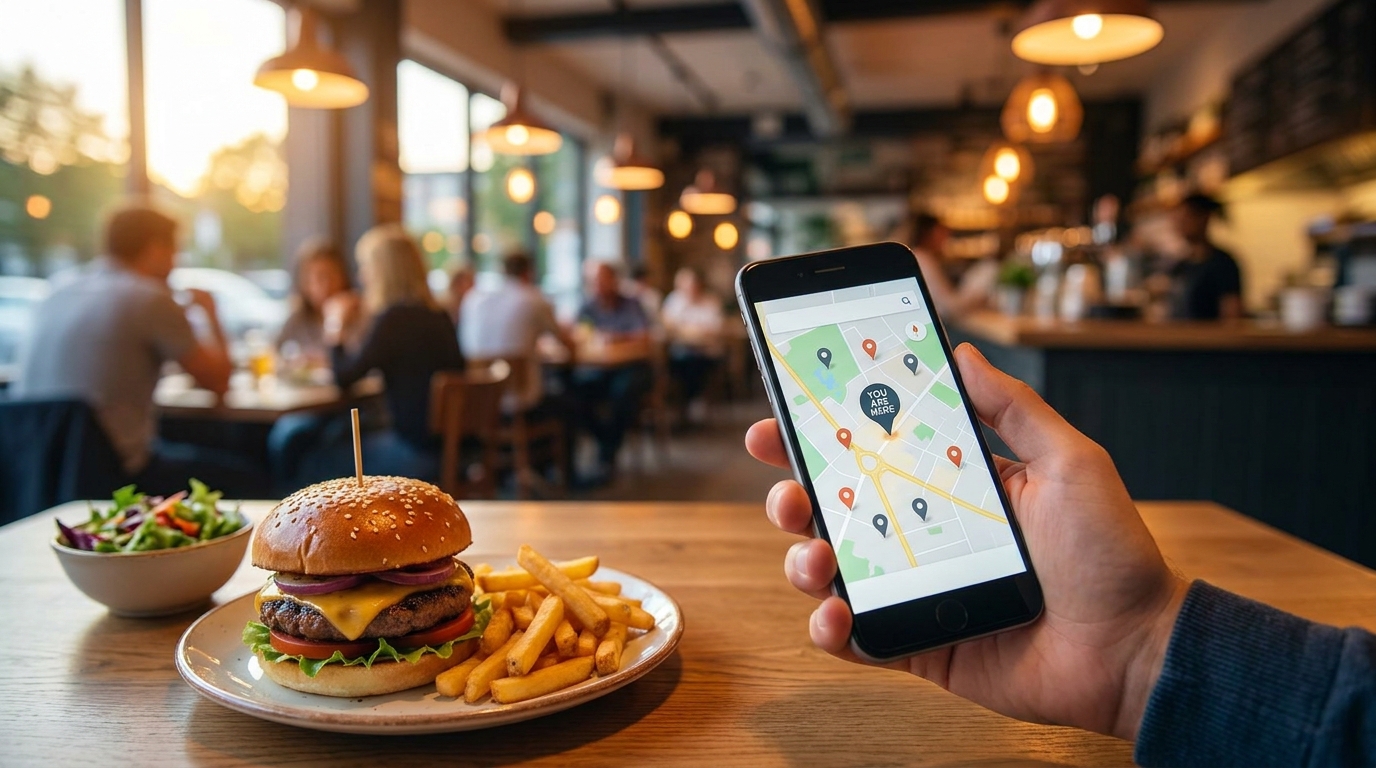
When someone in your neighborhood gets hungry and pulls out their phone, they rarely scroll far. They type something like "tacos near me" or "best brunch" into Google, glance at the top three results on the map, check a photo or two, and make a decision. If your restaurant is not in that short list, those diners are eating somewhere else tonight.
This is why local SEO matters so much for restaurants. Unlike general marketing, local search is one of the few channels where a small independent restaurant can outrank a national chain. Google is not deciding who has the biggest ad budget. It is deciding who best answers the question "where should this person eat right now, close to where they are standing?"
The even better news: most of your competitors are doing this badly. Their listings are half-filled, their photos are stale, their websites are slow or missing entirely. A restaurant that works through the steps below can realistically go from invisible to a top Maps result in its neighborhood within a few months.
Here is a practical, step-by-step guide to local SEO for restaurants, ordered by impact.
---
How Google Ranks Restaurants on Google Maps
Before the steps, it helps to know what Google is actually measuring. Local rankings come down to three main factors:
| Factor | What It Means | What You Control |
|---|---|---|
| Relevance | How well your listing matches what the searcher asked for | Categories, description, menu, website content |
| Distance | How close you are to the person searching | Your address (fixed), plus service area settings |
| Prominence | How well known and trusted your business appears | Reviews, photos, citations, links, overall web presence |
You cannot change distance, and you cannot fake prominence with tricks. But relevance and prominence are almost entirely in your hands, and they compound. Every completed profile field, every new review, and every accurate listing makes the next ranking improvement a little easier.
---
Step 1: Claim and Fully Complete Your Google Business Profile
Your Google Business Profile (formerly Google My Business) is the single most important asset in restaurant local SEO. It is what powers your listing on Google Maps and in the local results panel. If you have never claimed it, search your restaurant name on Google and look for the "Own this business?" link, then claim it.
Once claimed, completeness is the goal. Google rewards listings that give searchers a full picture, and incomplete profiles lose rankings to complete ones.
Work through every field:
- Primary category: This is the strongest relevance signal you control. Pick the most specific accurate option. "Tex-Mex restaurant" beats "restaurant" if that is what you serve. You can add secondary categories too (for example, "Breakfast restaurant" or "Caterer"), but the primary one matters most.
- Hours, including holiday and special hours: Wrong hours are one of the fastest ways to lose trust with both Google and customers. Showing up to a closed restaurant is a one-star memory.
- Phone number and website: Use a local phone number with your area code where possible, and link to your actual website, not a Facebook page.
- Your menu: Upload or link a real, readable menu. Google now lets restaurants show menu items directly on the listing. A photo of a paper menu is better than nothing; a real web menu is better still.
- Attributes: Mark everything that applies, such as outdoor seating, wheelchair accessible entrance, free Wi-Fi, curbside pickup, or family friendly. These feed filter searches like "patio" or "takeout."
- A written description: 750 characters, in your voice, mentioning your neighborhood and what you are known for. Write it for humans first, Google second.
A completed profile takes an afternoon. It is the highest-return afternoon you will spend on marketing this quarter.
---
Step 2: Get Your Name, Address, and Phone Number Consistent Everywhere
Google cross-checks your business information across the web. If your address reads "1200 W. Main St" on your website, "1200 West Main Street" on Yelp, and "1200 W Main" on a local directory, Google loses confidence in which of those is right, and diluted confidence becomes diluted rankings.
This is called NAP consistency (name, address, phone), and it is quietly one of the biggest local ranking factors.
What to do:
1. Pick one exact format for your restaurant name, address, and phone number.
2. Use that exact format on your website footer and contact page.
3. Check the major data providers and directories: Apple Maps, Bing Places, Yelp, TripAdvisor, Facebook, and any local city guides or restaurant associations you belong to.
4. Fix old listings from previous owners, old phone numbers, or pre-renovation addresses. These zombie listings genuinely split your ranking power.
One caution: do not keyword-stuff your business name (like "Maria's - Best Tacos in San Antonio"). Google's guidelines prohibit it, competitors can report it, and it can trigger a suspension that takes weeks to appeal.
---
Step 3: Earn and Manage Reviews Like They Are Marketing
Reviews are the engine of prominence. Volume, recency, and your overall rating all influence local rankings, and reviews are also the single biggest thing diners read before choosing you.
The practical playbook:
- Ask at the right moment. The best time is right after a positive moment: a compliment from a table, a completed pickup order, a good review of the food by a regular. A small card in the check presenter with a QR code to your Google review link works far better than hoping.
- Make the link effortless. Google gives you a short review link in your Business Profile. Text it, print it on receipts, put it on table tents.
- Reply to every review, good and bad. Responses signal activity to Google and show prospective diners that you pay attention. For negative reviews, stay brief, stay calm, and move the conversation offline with a phone number.
- Never buy reviews or incentivize them. Fake reviews violate Google policy and get stripped, sometimes with a penalty attached.
Fifteen thoughtful replies a month beats two hundred five-star ratings with silence. Consistency over time is what both Google and customers respond to.
---
Step 4: Put Local Keywords on Your Actual Website
Your Business Profile gets you onto the map. Your website is what convinces Google you deserve to rank on it, especially for searches that mention a neighborhood, dish, or occasion.
Make sure your website clearly says:
- What you are: "family-owned Tex-Mex restaurant"
- Where you are: your neighborhood, city, and nearby landmarks in natural sentences
- What you are known for: signature dishes written out in text, not trapped in photos or PDFs
Good places for this:
- Your homepage headline and intro paragraph. Not keyword soup, just honest description: "Wood-fired pizza and craft beer in the Pearl District."
- Your menu page. Dish names and descriptions are searchable text. "Birria tacos" on your menu page helps you show up when someone searches exactly that.
- A contact or location page with your address, hours, parking notes, and an embedded Google Map.
- Page titles. The browser tab title for your homepage should read something like "Maria's Cantina | Tex-Mex Restaurant in San Antonio, TX", not just "Home."
If your site serves multiple areas you genuinely operate in (locations, catering zones), give each one its own honest page. Do not create twenty near-duplicate "city" pages for places you only deliver to occasionally; Google recognizes padding and it works against you.
---
Step 5: Make Your Website Fast and Mobile-Ready
Most local searches happen on a phone, often while the searcher is already in the car. Google knows this and favors sites that load quickly and work on small screens.
Run your site through Google's free PageSpeed Insights tool. If it scores poorly, the usual restaurant offenders are:
- A PDF menu that makes phones download a heavy file instead of showing a clean web page
- Huge unoptimized photos straight off a DSLR camera
- Old template code, popups covering the screen, or broken mobile layouts
A fast, simple website with a real HTML menu will beat a slow, beautiful one every time in local search. If your current site cannot get there, that is exactly the problem Free Restaurant Website solves: we build independent restaurants a fast, custom, mobile-first site at no cost.
---
Step 6: Add Photos and Keep Them Coming
Listings with fresh photos get more clicks, and clicks feed rankings. You do not need a professional photographer every month, but you do need more than three photos from 2021.
A sustainable rhythm:
- Upload 5 to 10 new photos a month: dishes, the dining room, the bar, staff, that weekend special.
- Name files descriptively before uploading (birria-tacos.jpg, not IMG_4821.jpg).
- Add a short video now and then. Even a 15-second clip of the fajitas hitting the table stands out.
- Encourage customers to upload their own photos. Google counts guest photos toward your listing's activity.
Food photos are your best salespeople in search results. Treat the photo section of your profile like a rotating specials board, not a filing cabinet.
---
Step 7: Get Mentioned and Linked by Local Websites
Links from other local websites tell Google you are a real, established part of your community. You do not need hundreds. A handful of genuine local links moves the needle for a restaurant.
Where restaurant links actually come from:
- Your chamber of commerce and local business associations
- Local food bloggers and "best of" listicles (a short, friendly email with a couple of great photos is often all it takes)
- Local news coverage of events, anniversaries, or charity involvement
- Suppliers, breweries, and farms you partner with, which usually list their restaurant customers
- Sponsorships of local teams, schools, and 5K races, which nearly always include a website link
Skip anything that sells links outright. Paid link schemes are against Google's rules and carry real risk for small businesses.
---
Step 8: Use Google Posts and Q&A
Inside your Business Profile dashboard, Google Posts let you publish short updates that appear right on your listing: this week's special, a live music night, a holiday menu, a job posting. They expire from the display after a while, so treat them like a lightweight social feed: one post a week is plenty.
The Questions & Answers section works the other way: anyone can ask a question on your listing, and anyone can answer it. Monitor it and answer promptly, and seed it with your own frequently asked questions ("Do you take reservations?" "Is there parking?"). Every pre-answered question is one less hesitation between a searcher and your front door.
---
Common Local SEO Mistakes Restaurants Make
A quick list of what quietly kills restaurant rankings:
- Keyword-stuffed business names that violate Google guidelines and invite suspensions
- A Facebook page standing in for a website, which cannot carry your schema, menu structure, or review of your own content
- Menu as a PDF or image only, unreadable to Google and slow for mobile diners
- Ignoring the listing for months, then wondering why a competitor with weekly activity outranks you
- Different phone numbers and addresses across directories, splitting your prominence signal
- Buying fake reviews, which gets removed and can drag your whole listing down
None of these are hard to fix. They are just easy to ignore until a competitor down the street fixes them first.
---
How Long Until You See Results?
Local SEO is a compounding asset, not a light switch. Rough expectations for a restaurant starting from a neglected position:
- Weeks 1 to 2: Profile completed, categories fixed, NAP cleanup started. You may see small gains quickly from the profile work alone.
- Months 1 to 3: Review velocity builds, photos accumulate, website improvements get indexed. Map positions begin to move for neighborhood searches.
- Months 3 to 6: Citations mature, local links land, and you start holding positions for "near me" and dish-specific searches rather than just appearing.
- 6 to 12 months: With steady activity, top-three Maps placement in your immediate area becomes realistic in most suburban and small-city markets.
Dense downtown markets take longer and reward specialty more: "gluten-free bakery" is winnable when "bakery" is not.
---
Get the Website Part Right Without Spending Anything
Half of the work above happens inside your Google Business Profile, and you own that starting today. The other half depends on your website being fast, mobile-friendly, and readable by Google. That is the part where independent restaurants most often stall, because agencies quote thousands of dollars for a basic site.
Free Restaurant Website builds independent restaurants a custom, modern, fast website at no cost: no monthly fees, no ads, no fine print. Your menu becomes real HTML text that Google can read, your hours and location are structured the way search engines expect, and direct online ordering through SendFoodOrder is there if and when you want it.
Claim your free restaurant website, then put the hours you save into the profile and photo work that actually moves your Maps ranking.
Free Website Offer
Get a modern website for your restaurant with zero cost and no monthly fees
We design and host your menu, hours, and photos on a custom domain. Keep 100% of your food sales, with optional online ordering when you are ready.