How Much Does DoorDash Charge Restaurants? Fees Explained
A plain breakdown of DoorDash fees for restaurants: marketplace commissions, payment processing, promotions, and what you really keep per order.
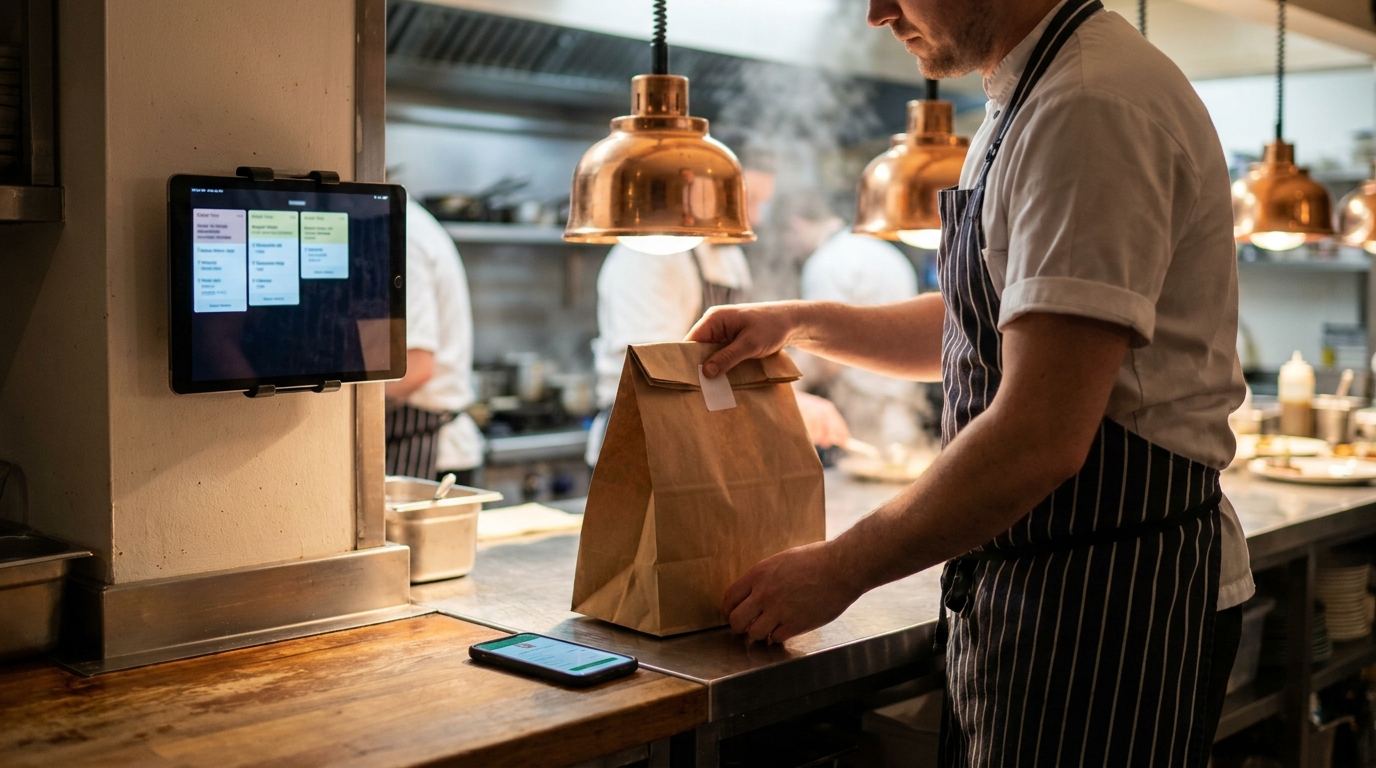
If you run a restaurant, DoorDash is probably already part of your life. It brings in orders you would never see otherwise, and it brings a fee structure that eats into every ticket in ways that are easy to miss.
So how much does DoorDash actually charge restaurants? The honest answer is that the commission depends on the plan you sign up for and the services you use. Most restaurants land somewhere between 15% and 30% of the order subtotal for marketplace delivery, plus smaller fees for pickup orders, payment processing, and promotions.
That range sounds simple. The real cost per order is not. Let me break down every fee line, what it applies to, and how much you actually keep once DoorDash is done with the ticket.
Quick Answer: DoorDash Fees for Restaurants
DoorDash does not publish one flat rate. It sells tiered partnership plans, and your commission depends on which tier you are on and how much of the delivery work DoorDash handles.
| Plan | Commission on Delivery Orders | Commission on Pickup Orders | What You Get |
|---|---|---|---|
| Basic | ~15% | ~6% | Listing on the marketplace, DoorDash delivery drivers |
| Plus | ~25% | ~6% | Higher visibility, lower delivery radius limits, some marketing help |
| Premier | ~30% | ~6% | Top placement, widest delivery range, priority support |
| Self-Delivery / Online Ordering | 0% commission | 0% commission | You handle delivery or pickup, keep the full subtotal |
On top of the commission, DoorDash adds payment processing fees on orders placed through its system. Expect roughly 2.9% plus $0.30 per transaction on lower tiers, and around 3.3% plus a small flat fee on higher tiers. These processing charges apply even on the 0% commission online ordering product, because a payment still has to run through a card network.
Read those numbers together and the true cost on a delivery order is often closer to 20% to 33% of the subtotal than the headline commission suggests.
The Three Marketplace Plans
DoorDash structures its merchant partnerships around three subscription tiers. Higher tiers cost more per order but buy you more visibility and reach.
Basic (around 15%)
The entry-level plan lists your restaurant on the DoorDash marketplace and gives you access to their delivery network. The lower commission looks attractive, but the trade-offs are real:
- A tighter delivery radius, so customers farther from your door may not see you.
- Lower placement in search results and category listings.
- Fewer promotional tools and less marketing support.
For a restaurant that is already well known in its neighborhood and just wants an extra channel, Basic can work. For a newer spot trying to build awareness, it can leave you invisible.
Plus (around 25%)
The middle tier raises your commission by roughly ten points but improves your positioning:
- Better placement in the marketplace, which means more impressions.
- A wider delivery radius than Basic.
- Access to basic marketing and promotion features.
This is where a lot of growing restaurants end up, because the visibility difference between Basic and Plus usually shows up directly in order volume.
Premier (around 30%)
The top plan puts you in the most visible spots on the platform and gives you the widest delivery radius and priority support.
At a 30% commission, the math gets uncomfortable fast. If your food cost is 30% of the menu price and labor is another 30%, a Premier delivery order can leave almost nothing behind after the commission, packaging, and processing fees. That does not mean the plan is bad, but it does mean you need to know your real per-order margin before signing up for the most expensive tier.
Pickup Orders: The Lower Fee You Should Use
Here is the part most restaurant owners underuse. DoorDash charges a much smaller commission on orders the customer picks up themselves, typically around 6%.
There is no delivery driver involved, no delivery queue, and no logistics cost to DoorDash, so the fee drops. That makes pickup orders through the marketplace a far healthier transaction than delivery.
The catch is that customers have to choose pickup at checkout instead of delivery. You can nudge them there with:
- A clearly worded pickup option on your storefront.
- Slightly better pricing or a small pickup-only promo.
- Packaging and handoff that make picking up feel quick and easy.
Even a modest shift from delivery to pickup moves meaningful margin back onto your side of the ledger.
Payment Processing Fees
Every card transaction carries a processing cost, and DoorDash passes that through. In practice, restaurants report something close to 2.9% plus $0.30 per order on the lower partnership tiers and roughly 3.3% plus a small flat amount on the higher tiers.
On a $40 order, that is around $1.46 at 2.9% plus $0.30. It sounds small until you stack it on top of a 25% or 30% commission. Payment processing is unavoidable for any card-based transaction, but it is worth counting correctly when you compare DoorDash against your own ordering system.
Promotions, Ads, and Sponsored Placement
DoorDash makes money beyond commissions. Restaurants can buy additional visibility through sponsored listings, homepage placements, and promotions like free delivery or percentage-off deals.
These are optional, but they carry two costs at once:
1. The ad spend or promo discount itself. You pay to appear higher or to subsidize the customer's order.
2. A larger commission base. Discounts and fees can be calculated on a subtotal that still includes the commission, so a promo can quietly raise your effective rate.
Promotions can absolutely pay off when they bring in new regulars. Treat them like any other marketing budget line, with a clear cap and a way to measure whether the orders they generate are actually profitable.
Small Order and Other Line-Item Fees
Depending on your market and agreement, other charges can appear:
- Small order fees on tickets below a minimum threshold, because low-value deliveries are less efficient for the platform.
- Long-distance or expanded range fees in some cities and metros.
- Chargeback or adjustment fees when customers dispute an order.
- Equipment or tablet fees in some partnership setups.
None of these are huge on their own. Combined with commission and processing, they are the reason your payout per order is usually lower than the commission percentage alone implies.
What You Actually Keep: A Worked Example
Numbers make this concrete. Imagine a customer places a $40 delivery order (before tax and tip) on the Plus plan at 25%.
| Line | Amount |
|---|---|
| Order subtotal | $40.00 |
| DoorDash commission (25%) | -$10.00 |
| Payment processing (approx. 2.9% + $0.30) | -$1.46 |
| Payout before food and labor costs | $28.54 |
Now subtract your own costs. If food and packaging run 32% of the menu price ($12.80) and labor attributable to the order is 20% ($8.00), you are left with roughly $7.74 in contribution before rent, utilities, and overhead. On a Premier order at 30%, the same ticket would pay DoorDash $12.00 plus processing, leaving about $5.64 before your own costs.
That is the number that matters. Not the commission percentage on its own, but the margin that survives after everyone, including the platform, is paid.
Why the Commission Is Not Always What the SERP Says
You will see headlines claiming DoorDash takes a flat 30% from every restaurant. You will also see claims of 10% to 15%. Both are describing part of the picture.
DoorDash commissions are negotiated and vary by market, by restaurant, and by the level of service. A high-volume, established operator can sometimes negotiate a better rate than a single-location restaurant opening its first delivery account. The published tiers are a starting point, not a guarantee.
The only reliable way to know your real rate is to read your merchant agreement and reconcile your DoorDash statements against the orders you actually fulfilled.
How to Reduce What DoorDash Takes
You cannot eliminate third-party fees if you use third-party delivery, but you can manage them.
1. Match the plan to your goal. If you do not need maximum reach, Premier is a costly default. Basic or Plus often serves independent restaurants better.
2. Push pickup. The 6% pickup rate is dramatically better than delivery commissions. Make pickup the easy choice on your storefront.
3. Price for the channel. Many successful restaurants set delivery menu prices 15% to 20% higher than in-store prices to absorb the commission. Customers expect a delivery premium.
4. Audit promotions. Run them with a hard budget and cut the ones that do not produce repeat customers.
5. Measure contribution margin per order, not just order volume. More orders at a loss is not growth.
6. Build your own ordering channel. Every order that comes through your own website instead of the marketplace keeps the commission in your pocket.
That last point is the biggest lever, and it is the one most independent restaurants ignore.
The Commission-Free Alternative: Your Own Ordering Channel
DoorDash is a customer acquisition channel, not a free service. You are paying 15% to 30% for access to their audience and drivers. That trade can be worth it, but it is expensive to rely on as your only ordering path.
A direct ordering system on your own website flips the economics. Instead of handing a quarter of the ticket to a marketplace, you pay only processing fees and keep the rest. Orders placed directly with you also build a customer list you actually own, so you can bring those diners back without paying for the privilege every time.
If you want a website that can take direct pickup and delivery orders and route them straight to your kitchen, Free Restaurant Website builds and hosts one for your restaurant at no cost. We pair it with an optional direct ordering system, SendFoodOrder, so you can grow online orders without the marketplace commission stack. If you never need ordering, the website stays free.
Frequently Asked Questions
How much does DoorDash charge restaurants per order?
Typically around 15% for the Basic plan, 25% for Plus, and 30% for Premier on delivery orders, plus payment processing of roughly 2.9% to 3.3% plus a small flat fee. Pickup orders usually run about 6%.
Does DoorDash charge restaurants for pickup orders?
Yes, but at a much lower rate, usually around 6% of the subtotal, since no delivery driver is involved.
Are DoorDash fees negotiable?
They can be, especially for higher-volume restaurants or multi-location operators. The published tiers are a starting point, and your actual rate is set in your merchant agreement.
Is DoorDash worth it for a small restaurant?
It depends on your margins and your goals. As an additional discovery channel it can help. As your only ordering system, the 15% to 30% commission is a heavy ongoing cost that a direct ordering option can reduce.
What is the cheapest way to take online orders?
The cheapest path is a direct ordering channel on your own website, where you pay only payment processing instead of a marketplace commission. That is exactly what we help restaurants set up.
The Bottom Line
DoorDash charges restaurants between roughly 15% and 30% per delivery order depending on plan, plus processing and any promotions you run. On a $40 ticket, that can mean DoorDash takes $10 to $12 before your food and labor costs are even counted.
You cannot make that commission disappear while you use the marketplace. But you can choose the right plan, push pickup, price for delivery, and build a direct ordering channel that keeps more of every order on your side.
Start with your DoorDash statement and run one week of orders through the math above. Once you see your real per-order margin, the right moves become obvious.
Get a free restaurant website and start taking direct orders.
Free Website Offer
Get a modern website for your restaurant with zero cost and no monthly fees
We design and host your menu, hours, and photos on a custom domain. Keep 100% of your food sales, with optional online ordering when you are ready.